I'm back from Africa!


The Basilica Cistern original photo by Corina Fratila
Dear Community,
I am back!
I returned from South Africa approximately 36 hours ago.
Ever since I first heard about the African bush and savanna, I have felt a desire to experience them.
Stories of encounters with wild animals first piqued my interest. But I was equally drawn to stories of people experiencing a deep connection to the land and her energies.
(Quick (or not-so-quick) detour:)
I started referring to the Earth as “her” after hearing and reading about Gnostic mythology and its stories of Sophia. In Greek, Sophia means Wisdom. In some Gnostic traditions, Sophia is a divine feminine being connected with the origins of the cosmos. In some modern spiritual interpretations, she is understood as an expression of the living intelligence of the Earth itself.
According to certain Gnostic creation stories, the cosmos originates in an ultimate divine source beyond ordinary human comprehension. From this divine fullness, emanations, also known as aeons, emerge, expressing different aspects of the divine.
One of these is Sophia. She embodies Wisdom, creative intelligence, and the impulse to create and know. Her story is also a story of separation: in some versions of the myth, her creative act leads to an imperfect world in which ignorance, limitation, and suffering become possible.
I find myself drawn to a particular interpretation of this story: Divine Wisdom entering the physical world, becoming embodied in matter, and experiencing all the vulnerability that comes with being alive. Our physical bodies, the cycles of birth and death, and our sense of separation from the Source become part of this larger story of existence.
In modern interpretations that connect Sophia with the Earth, this descent of Divine Wisdom into matter becomes an image of cosmic intelligence embodied in our living planet.
Imagine the oceans and rivers as her blood, the forests as her lungs, and the soil as her body. Every creature becomes an expression of the life unfolding within her. The Earth is no longer merely a collection of resources orbiting the Sun. She becomes a living presence, and we humans become another expression of her creative force, her Dream made flesh.
Of course, this is a spiritual and ecological interpretation of the Gnostic myth, not proof that the planet possesses a human-like consciousness. But I find it a powerful way to orient my life, especially in the face of our current ecological and humanitarian crises.
If we are part of the living Earth rather than separate from her, caring for her becomes more than an environmental responsibility. It becomes a way of caring for the larger living system of which we are part.
Long story short, some people describe certain places as making it easier to feel connected to the Living Earth, or Sophia. South Africa was one of those places I felt drawn to experience.
And now, having been there, I have stories of my own to tell.
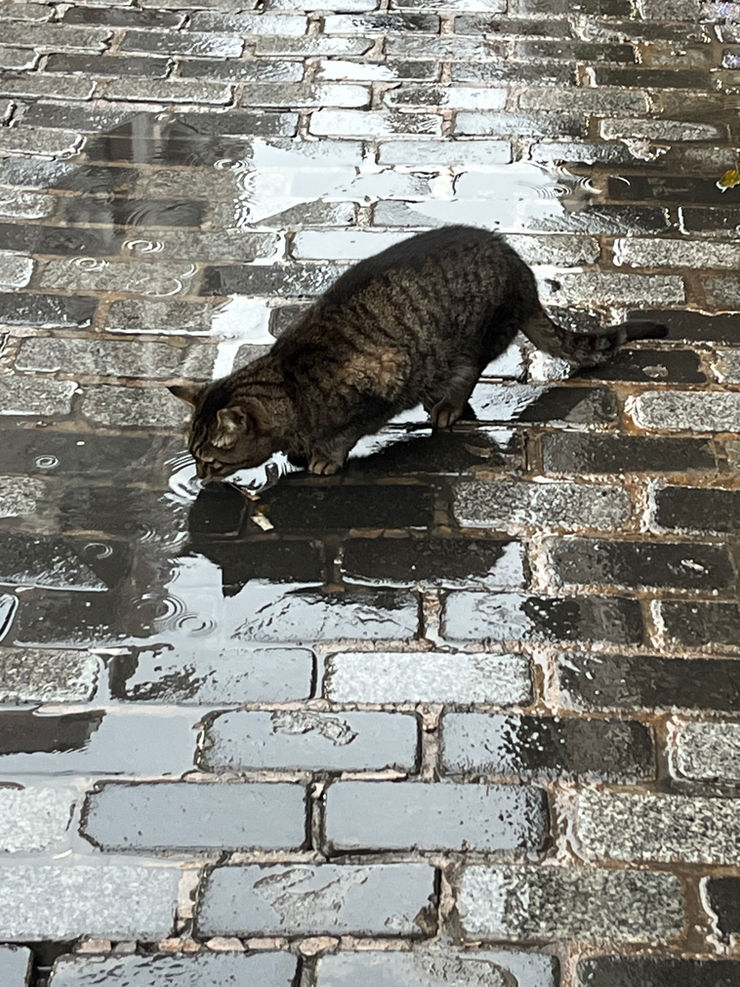
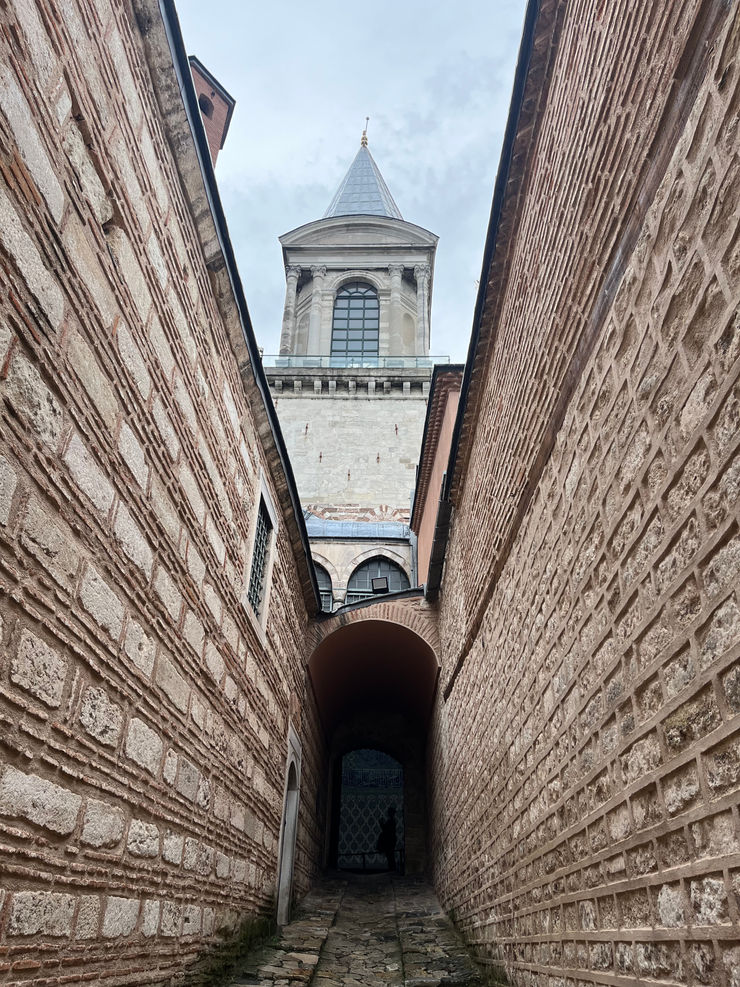
My story starts in Istanbul, for the very practical reason that I didn’t want to be on a flight for 20 hours (that is how long it usually takes to get from Washington, D.C. to Johannesburg, South Africa’s largest city). Now, if you have never been to Istanbul, please know that this magical city, straddling two continents and brimming with history (and cats!), breathtaking landscapes, magnificent monuments, and an intoxicating mix of scents and aromas, is a place I think is well worth experiencing at least once in one’s lifetime. There were two highlights amongst MANY treasures (I am picking only two for the purpose of this newsletter) for me on my brief Istanbul stay: the Basilica Cistern (pictured in the photograph above), and the Turkish Bath also known as Hammam (gratitude to my one and only Turkish friend for introducing me to the above marvels).
The Basilica Cistern itself dates back to around 532 CE (almost 1500 years old!), when Emperor Justinian the First commissioned its construction in Constantinople, as Istanbul was then known. Water arrived through an extensive network of aqueducts carrying it from springs and catchment areas outside the city, including the forests of Thrace. The cistern could hold an astonishing 80 million litres of water, the equivalent of about 32 Olympic-sized swimming pools, hidden beneath the streets of Istanbul. Over time, these magnificent underground structures slowly disappeared from the city's collective memory, and by the sixteenth century, the great underground structure had largely faded from awareness, although local residents still knew there was water beneath their homes.
In 1545, a French scholar and traveler named Petrus Gyllius made the observation that people in the city were selling unusually fresh fish from their homes and began investigating. He then found out that people were drawing water, and even catching fish, through openings in the floors of their houses. His explorations led him into the vast, ancient, subterranean palace, supported by hundreds of columns (336 to be more precise!), that we now know as the Basilica Cistern.
Moving on. The experience of a Turkish Bath is something I would like to have over and over in my life, ongoing. I actually can’t believe I lived to the age of 54 without knowing about this tremendous experience of devotion to the human body. I was guided to go to one of the historical hammams, however, my interaction with the front desk person at the Cağaloğlu Hamam left me feeling taken advantage of (don’t get me started on the Turkish customer service in Istanbul!), so I decided to try a smaller, less historic place.
In ChatGPT’s words: A hammam is a traditional Turkish or Middle Eastern public bathhouse, rooted in Roman and Byzantine bathing traditions and developed within Islamic cultures.
In my words: A hammam is a marble temple dedicated to water, or to cleanliness/total body exfoliation.
See picture below of the marble tub where water is collected to achieve the perfect temperature, and the little vessel that is used to pour the perfect-temperature water all over the body being cleansed.
Here’s what happened: a sturdy and formidable woman took me into her custody immediately after signing up for the hammam. Literally pulled off the towel I was wearing and left me standing there butt naked while ordering me to lay down on the heated marble and relax. Then, she started exfoliating my body with the loofah mitt- and as soon as there was the slightest sign that I was getting tense, she would make a “tsk tsk tsk” sound and order me sternly to relax, again and again. After the scraping and sanding down of the dead cells over my whole body, face and scalp was over, she poured warm water all over me, and followed that with the luxurious cloud of soap bubbles, made in some kind of cotton implement that she was moving up and down repeatedly. Eventually, she asked me to sit on another heated marble part of the bath and poured warm water on top of my head, all over. I felt like I was being baptized. I was already seeing this as a ritual cleansing, all making sense to me at the time, given that my next part of the trip was taking me to meet my oldest ancestors at the Cradle of Humankind, in Kromdraai, outside of Johannesburg, South Africa. (Declared a World Heritage Site by UNESCO in 1999, the site is home to the largest known concentration of human ancestral remains anywhere in the world).
As you can tell, the story of my trip is going to take a while, and this is all for today. In the tradition of story telling by Scheherazade from the One Thousand and One Nights I will leave you here, hoping you will long to find out more about my Turkish/African adventure. (Another detour: I read the Arabian Nights stories sometimes in my childhood, and they made a huge, lasting impression on me, as you can tell. Although known as the Arabian Nights, this extraordinary collection of stories has roots in Persian and Indian traditions and evolved through centuries of popular storytelling. In One Thousand and One Nights, Scheherazade is a clever and courageous young woman who marries a sultan who, after being betrayed by his first wife, has vowed to marry a new woman each night and execute her the following morning. Determined to stop the killings, Scheherazade begins telling the sultan a captivating story on their wedding night. But just before dawn, she stops at the most intriguing moment, leaving him desperate to hear what happens next. Unable to bear the suspense, he postpones her execution for another night. Night after night, she weaves tales of adventure, love, magic, and intrigue, always ending before the story is complete- here you go!)
Now you will have to open my future newsletters to find out what happens next!




With love, (a tiny sprinkle of) rage, and reverence, Your disorganized, recovering people-pleaser, community-dreamer, hope-filled activist in the making, deep-sleeper, clean compliment giver and receiver, not-a-true-exhibitionist, 21-day resetter, recovering prostitute, courageous by practice, trusting by skill, always with my head in the clouds, but loving my feet on the ground, soul worker (!), inner voice listener, pleasure list maker, Aquarium sleepover organizer, beginner-level meditator, wabi-sabi contemplator, self-fascinated observer, giving-up-machismo supporter, hot soup-slurper, enthusiastic and tired traveler, death by Yellowjackets antidote and higher consciousness dreamer, aspiring human rights warrior, zielschmerz-stricken, nap lover, mostly Romanian wine-drinker, Persephone-adjacent, always asking-for-permission, psychedelic explorer and guide, Hammam-obsessed, Scheherazade in-the-making,
Corina


Comments